
Business Resources
Where to Source Used Camera Gear for Resale: A UK Dealer's Guide
Learn how to source used cameras for resale in the UK, from eBay and auctions to repairs, wholesale suppliers and customer trade-ins.
By Andrew Anderton17 min read
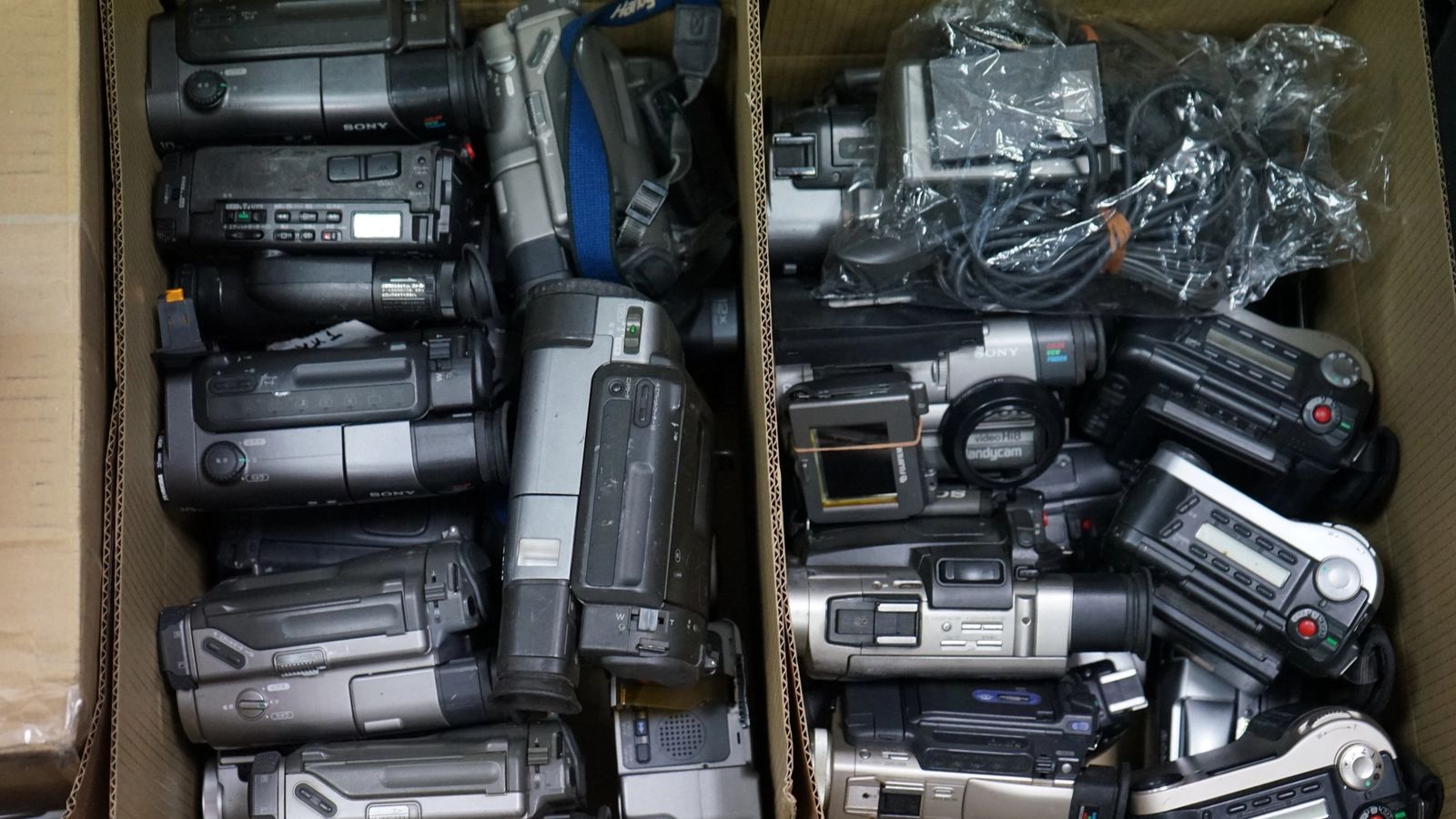
Finding profitable used camera stock is one of the biggest challenges facing camera retailers, refurbishers and independent resellers.
Whether you're starting a camera resale business or running an established shop, having a reliable source of second-hand cameras, lenses and photography equipment is essential.
But where do camera dealers actually get their stock?
I've been buying, repairing and reselling used cameras since 2021, building SDS from a small side project into a full-time camera business. Over that time, I've tried almost every sourcing method imaginable, from eBay and Facebook Marketplace to international imports, auction houses, bulk job lots and running my own customer trade-in service.
In this guide, I'll share the different ways to source used cameras for resale in the UK, the advantages and disadvantages of each, and what I'd do differently if I were starting again in 2027.
How I Started Reselling Used Cameras
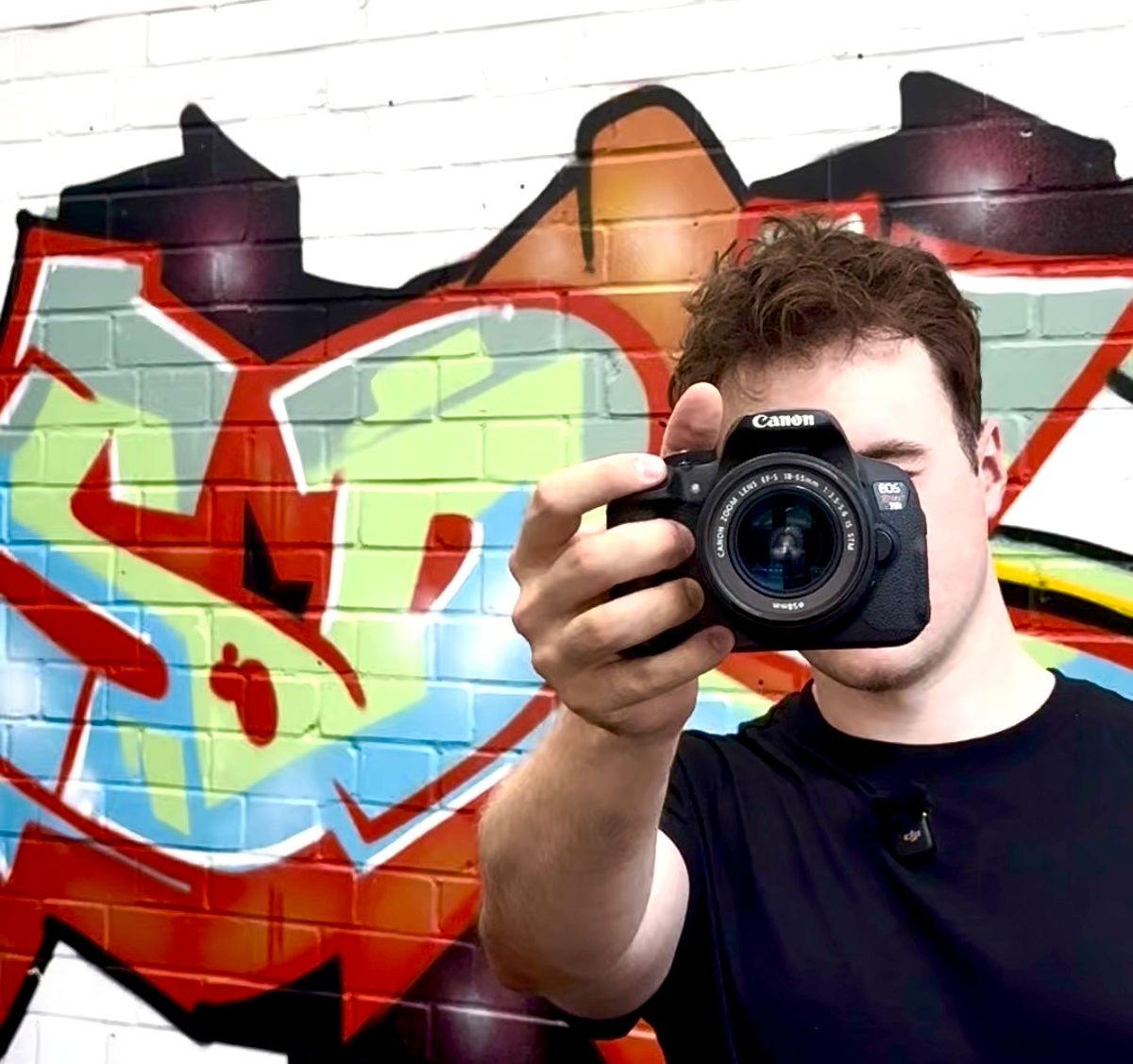
My journey into camera resale actually started through skateboarding.
I was interested in filming skateboarding videos, and one of the most iconic cameras in that scene was the Sony VX1000. I managed to get one for Christmas and quickly became obsessed with these old camcorders.
I wanted another, so I saved up around £60 and bought a broken VX1000 on eBay.
With some help from my dad, I managed to repair it. Suddenly, I had a camera worth several hundred pounds that I'd bought for a fraction of its working value.
I kept that camera, but the experience made me realise there was an opportunity in repairing and reselling used equipment.
For roughly the next year, I focused almost exclusively on buying broken Sony VX1000s, repairing them and eventually reselling them. I became known within the UK skate-camera community and even started offering repairs to other owners.
Over time, I expanded into other skateboarding cameras, vintage camcorders and eventually modern cameras and photography equipment.
What started as an interest in one camera model became SDS, originally known as Standard Def Sales.
Along the way, I discovered that finding profitable stock is often much harder than selling it.
1. Buying Used Cameras on Online Marketplaces
Best for: Beginners, specialist resellers and businesses with time to search for deals.
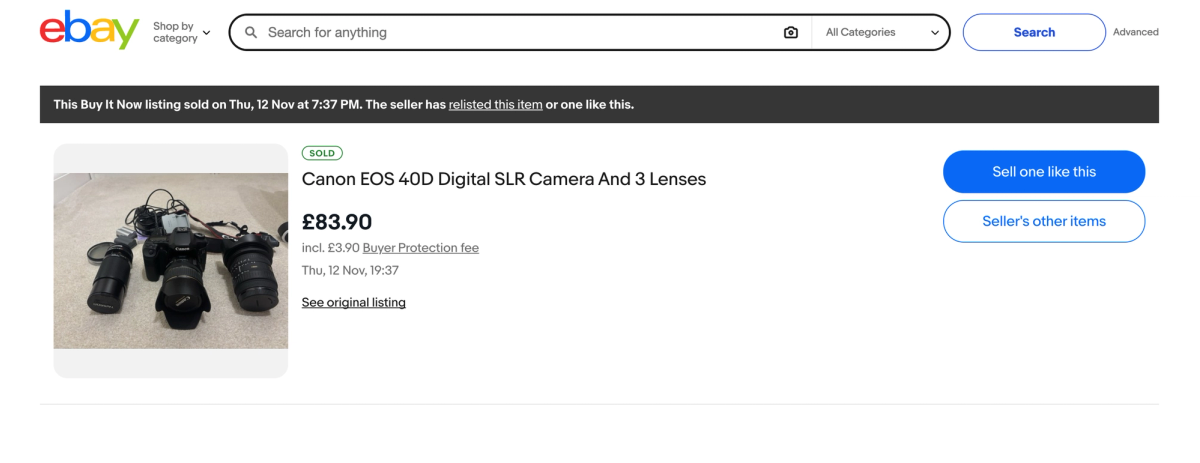
Online marketplaces are probably the most accessible place to start sourcing used camera equipment.
I've bought cameras through eBay, Facebook Marketplace, Gumtree, Vinted, Depop and several overseas marketplaces.
Finding underpriced cameras
I'd save searches for specific models and check them every 20–30 minutes. Underpriced listings could disappear quickly, especially for popular cameras.
Competition is fierce, particularly for popular modern cameras.
My advantage was knowing niche vintage models that larger resellers often overlooked, including which faults were repairable and what I could afford to pay.
My biggest marketplace find
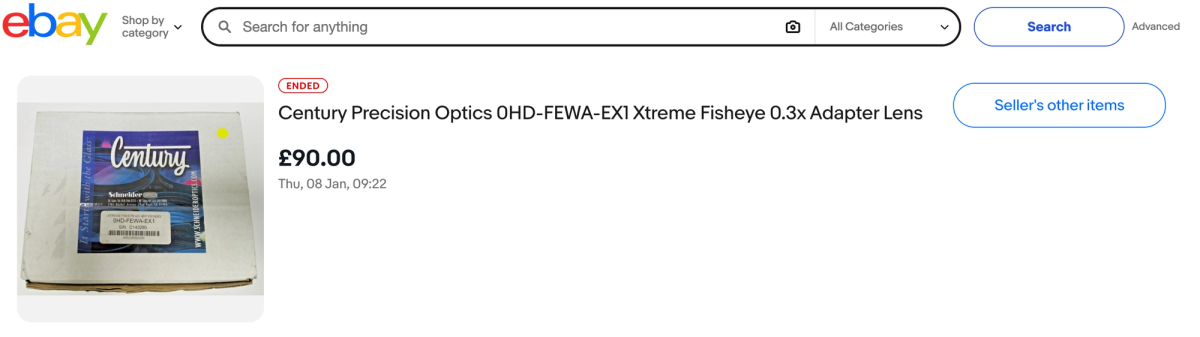
One of my most memorable purchases was an Xtreme fisheye lens used in skateboarding videography.
I found it on eBay for around £90 and later used it in a part-exchange transaction I valued at approximately £7,000.
That's an exceptional example, not a typical resale margin, but it shows what specialist product knowledge can sometimes uncover.
The disadvantages of marketplace sourcing
As SDS grew, I realised I couldn't spend hours refreshing eBay while also testing, cleaning, photographing and selling stock.
There are also other risks:
- Faulty equipment: Cameras can arrive with problems that weren't mentioned in the listing.
- Inaccurate descriptions: Condition and included accessories aren't always represented accurately.
- Competition: You're searching alongside private buyers, other dealers and automated sourcing tools.
- Cash flow: You usually pay before receiving and testing the equipment.
- Disputes and returns: Recovering money from a problematic purchase can take time.
I've had occasions where I purchased an expensive camera and the seller never dispatched it. Even when the marketplace eventually resolves the problem, having hundreds or thousands of pounds tied up can affect your ability to buy other stock.
My advice
I'd recommend specialising in a small number of models rather than trying to buy everything.
Build up your knowledge, understand typical selling prices and learn which faults and accessories affect value.
Use SDS's used-camera listings to compare advertised prices, but distinguish asking prices from completed sale prices.
2. Buying Broken Cameras to Repair and Resell
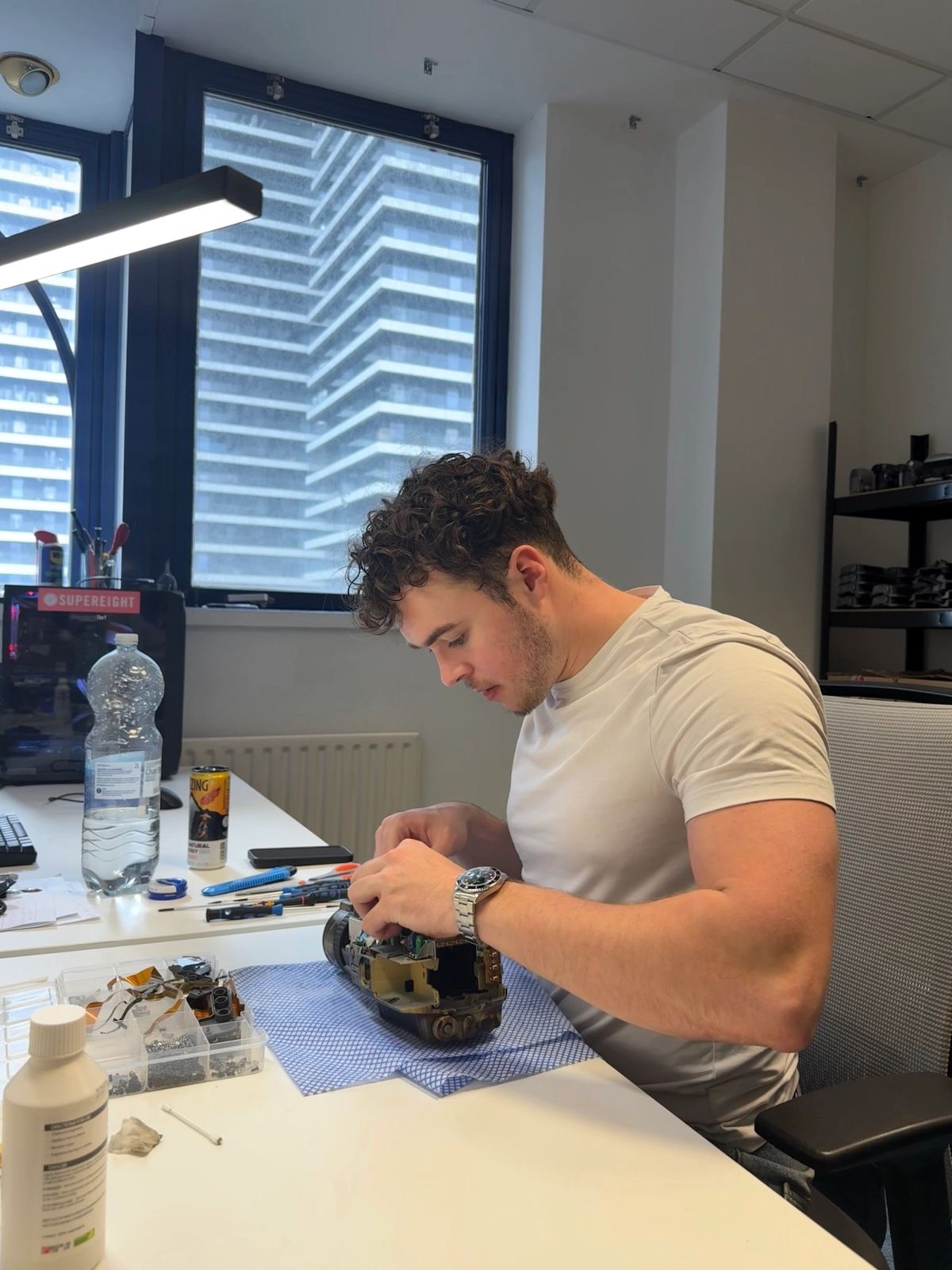
Best for: Repair technicians, technically minded resellers and businesses with access to spare parts.
A real repair example
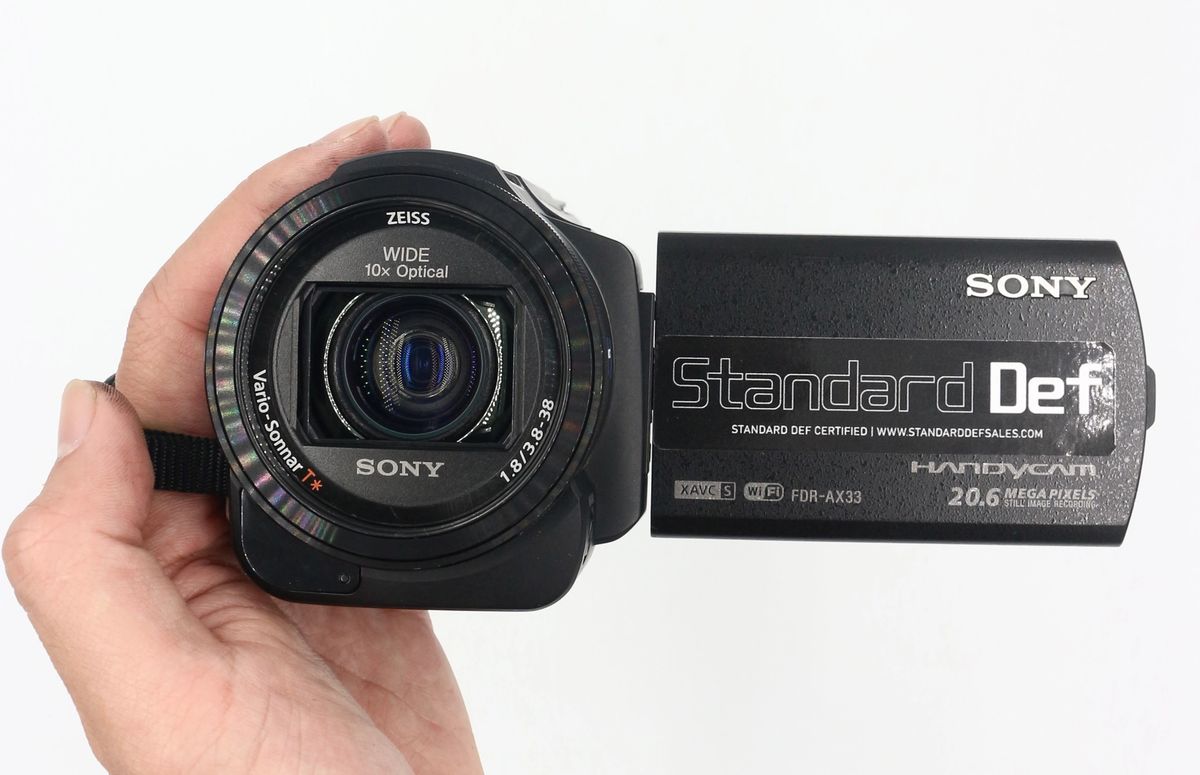
I once bought a broken Sony FDR-AX100 4K camcorder for approximately £150.
The screen wasn't working, but I was able to source a replacement part from AliExpress for less than £100.
After replacing the screen and thoroughly cleaning the camera, I sold it for approximately £550.
The repair took around an hour, excluding sourcing the part and other work.
That left a substantial difference between the purchase and selling prices, although parts, selling costs, time and other expenses still need to be accounted for.
See used Sony FDR-AX100 listings for current asking prices.
Why repairs can be profitable
Repair skills let you add value that many buyers cannot, but the margin depends on diagnosing the fault correctly and accounting for parts and labour.
Some older analogue models became easier for me to repair with experience. Modern digital cameras can require delicate electronics work, although difficulty depends on the specific fault.
The risks
A camera advertised as having a broken screen might also have sensor damage, motherboard faults or other hidden problems.
Before purchasing, consider:
- Whether the fault can be diagnosed reliably.
- The availability and cost of replacement parts.
- The likelihood of a successful repair.
- How much time the repair could take.
- The resale value once repaired.
- Whether the item still has value for parts if the repair fails.
Treat 'untested' as a risk category, not an assurance that the item works.
Sourcing broken cameras through SDS
At SDS Compare, we're also making it possible for customers to submit faulty cameras for trade-in.
This creates an opportunity for repair businesses to make offers on equipment that other dealers may not want.
Partners can focus on the categories and products they're interested in, including faulty equipment.
Learn about sourcing faulty and working cameras through SDS.
3. Where to Buy Wholesale Used Cameras and Camera Job Lots
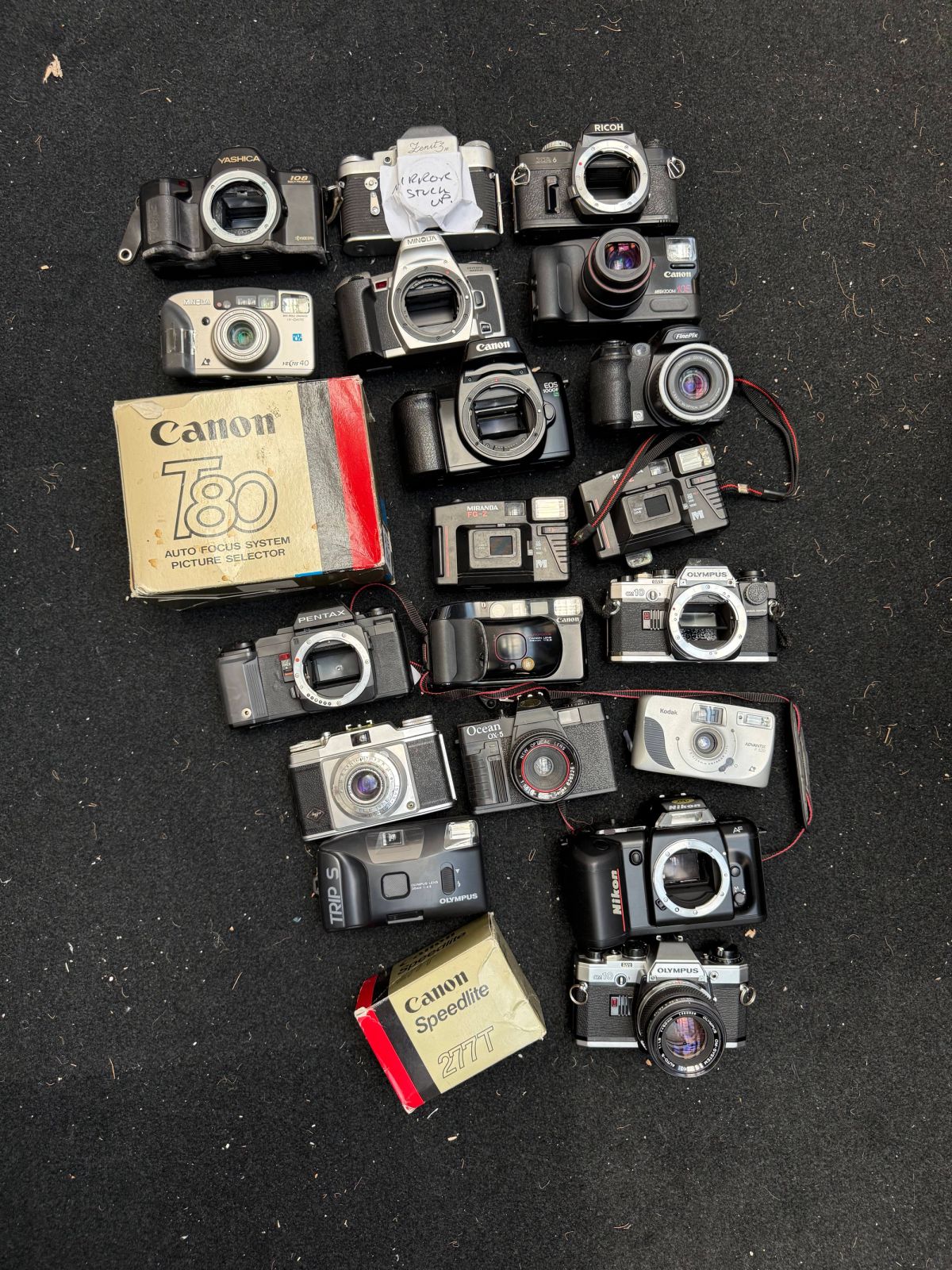
Best for: Dealers buying in volume, repair businesses and resellers with enough cash to absorb faulty stock.
You can find camera job lots on eBay, Facebook Marketplace, through auction houses and occasionally from other camera businesses.
Are camera job lots worth buying?
I once imported hundreds of untested cameras from Asia for around £1,000; almost all were unusable. That experience changed how I value untested job lots.
In my experience, large lots advertised as untested often contain a high proportion of faulty equipment.
But as a reseller, you should value the stock according to the risk rather than assuming everything works.
How to value a camera job lot
Instead of multiplying the number of cameras by their normal retail values, divide the stock into realistic categories:
- Working and ready to resell.
- Working but needing cleaning or accessories.
- Repairable equipment.
- Parts-only or uneconomical repairs.
Estimate how much each category is likely to be worth after costs.
I'd also recommend asking for a full model list, photographs, testing information and details of included accessories before making an offer.
4. Camera Auctions and Liquidation Sales
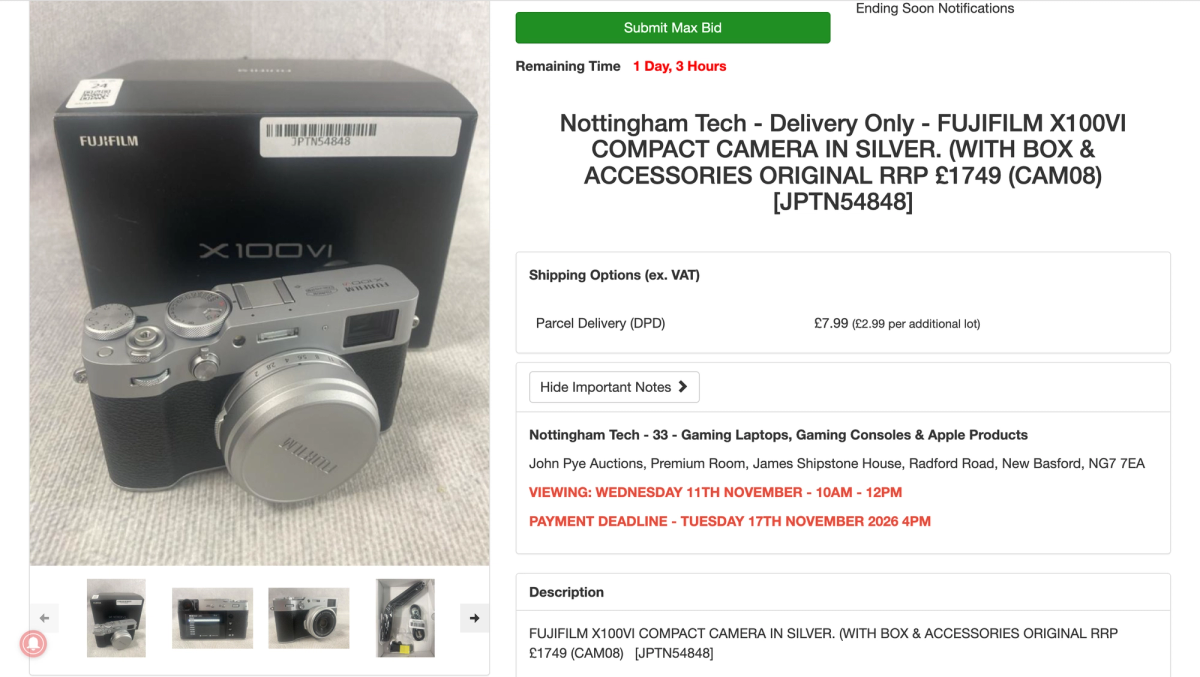
Best for: Dealers comfortable assessing mixed-condition stock and purchasing in bulk.
These might include customer returns, business clearances, ex-display stock, excess inventory and collections of photographic equipment.
Some UK auction platforms worth researching include:
I've had contact with Elite Auctions previously, although I haven't personally purchased through them.
The biggest mistake: ignoring the final cost
When buying through an auction, the hammer price isn't necessarily what you'll pay.
Depending on the auction, additional costs can include:
- Buyer's premium.
- VAT where applicable.
- Online bidding fees.
- Collection or shipping.
- Testing and refurbishment.
- Disposal of unusable equipment.
It's also important to understand the auction conditions. Commercial auctions may sell items as seen or untested, with limited guarantees.
My experience with studio liquidation stock
I once purchased a large bundle of equipment from a former London studio.
The cameras had clearly been used extensively. Many were extremely dirty, some smelled strongly of cigarette smoke and several had faults.
Testing the equipment took hours, and I eventually returned a significant portion of the order.
Some of the working cameras were profitable, but once I accounted for the time spent processing the entire lot, it wasn't nearly as attractive as I'd expected.
5. Importing Used Cameras From Japan, China and Europe
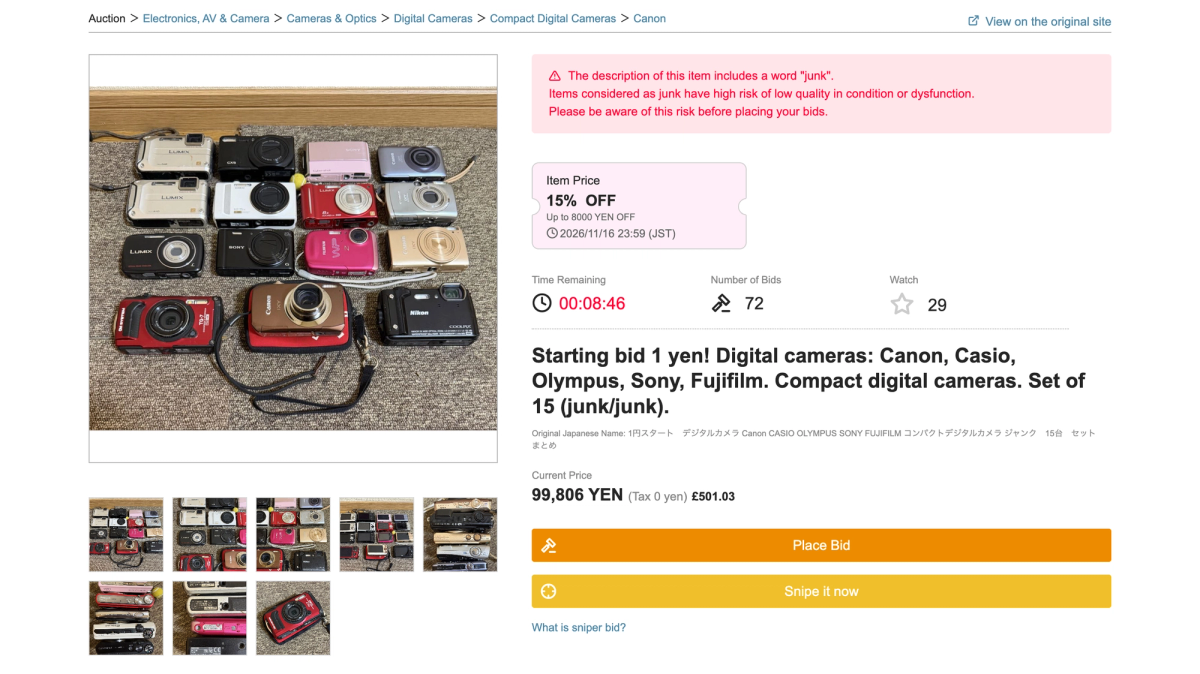
Best for: Specialist dealers sourcing rare models or equipment unavailable in the UK.
Japan is particularly popular among camera collectors and resellers because of its photographic history and large second-hand market.
I've purchased through overseas marketplaces and buying agents, including services such as Buyee, as well as sourcing stock from China and European sellers.
Why overseas prices can be misleading
A camera may look cheaper in Japan, but the landed cost can tell a different story.
Additional expenses may include:
- Currency conversion.
- Buying-agent commissions.
- Domestic shipping to a forwarding warehouse.
- Storage and repackaging.
- International shipping and insurance.
- Customs clearance charges.
- Import VAT and any applicable duty.
- Repairs, accessories and refurbishment.
Regional differences and grey imports
Some cameras intended for overseas markets may have restricted language options, different video standards or other regional differences.
I once spent hours dealing with firmware on an imported Sony A7 III body to get it into a usable configuration for the UK market.
Imported models can also be less desirable to some UK customers, particularly if they have regional restrictions or warranty limitations.
Returns can be difficult
One of my worst sourcing experiences involved importing a large quantity of used digital cameras from China.
Many arrived in terrible condition, despite the descriptions suggesting otherwise.
I spent months trying to sell them and eventually accepted a loss.
Returning international stock can be difficult, expensive or impractical, especially when using forwarding services.
My recommendation
I'd source internationally mainly for rare models that are hard to find in the UK, not simply because the headline price looks cheaper.
6. Camera Fairs, Charity Shops, Clearances and Local Suppliers
Best for: Resellers building local relationships and looking for occasional specialist opportunities.
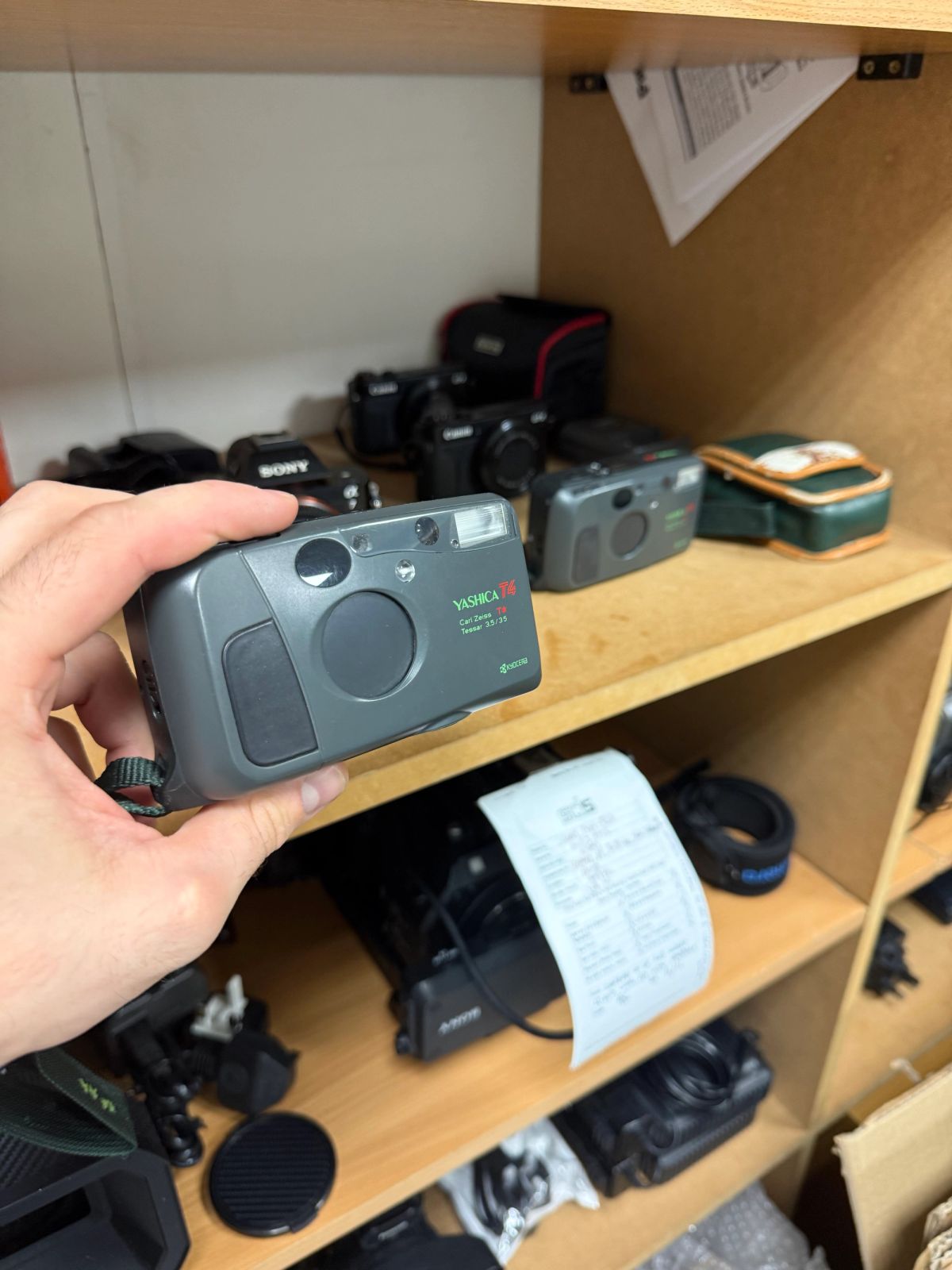
Over the years, I've sourced equipment through charity shops, estate clearances, local sellers and other businesses.
Charity shops
Charity shops occasionally receive valuable photographic equipment, especially older cameras and lenses.
However, many charities now operate their own online shops or eBay accounts, so genuinely underpriced stock can be harder to find.
You could approach local charities about purchasing photographic equipment in bulk, but in my experience these arrangements can be difficult to establish.
Estate clearances and studio clearances
These can be excellent opportunities to acquire collections that have been sitting unused for years.
One particularly good purchase came from a studio in Wales, where we acquired a substantial quantity of old camera equipment.
However, professional studio equipment can also be heavily used.
Check shutter counts, recording hours, connectors, lens condition and signs of excessive wear wherever possible.
Electronics recyclers and liquidation businesses
Some recyclers and clearance companies separate reusable electronics for resale.
Building a relationship with one could potentially provide a regular source of equipment.
I've known people whose stock supply depended on a handful of these relationships. When one supplier stopped providing equipment, their inventory suddenly dried up.
You may also have to take less desirable models to secure access to more profitable stock.
7. Buying Used Camera Stock From Other Dealers
Best for: Established retailers looking to fill gaps in their inventory.
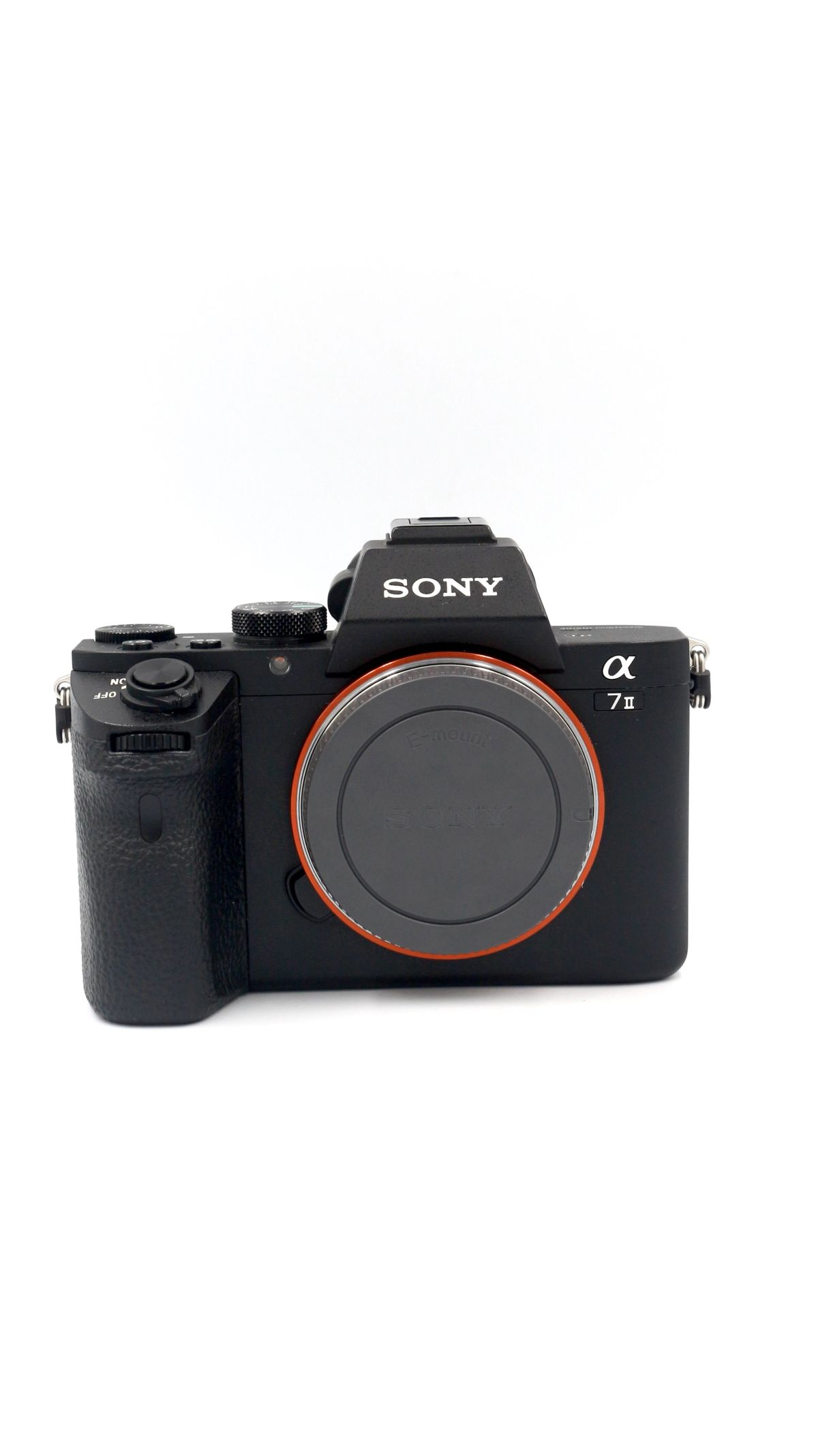
Another option is to build relationships with camera wholesalers, independent dealers and other resellers.
Some businesses specialise in buying large collections before selling individual items or batches to other retailers at trade prices.
This can be useful if you're looking for specific categories such as vintage film cameras, lenses or camcorders.
The main advantage is that you may be dealing with someone who already understands camera equipment and can provide more accurate descriptions than a general seller.
However, another dealer also needs to make money, so your margins may be narrower than when purchasing directly from consumers.
I'd consider this a useful supplementary channel, particularly when you need specific stock quickly.
8. Building Your Own Camera Trade-In Service
Best for: Established businesses prepared to invest in software, marketing and customer acquisition.
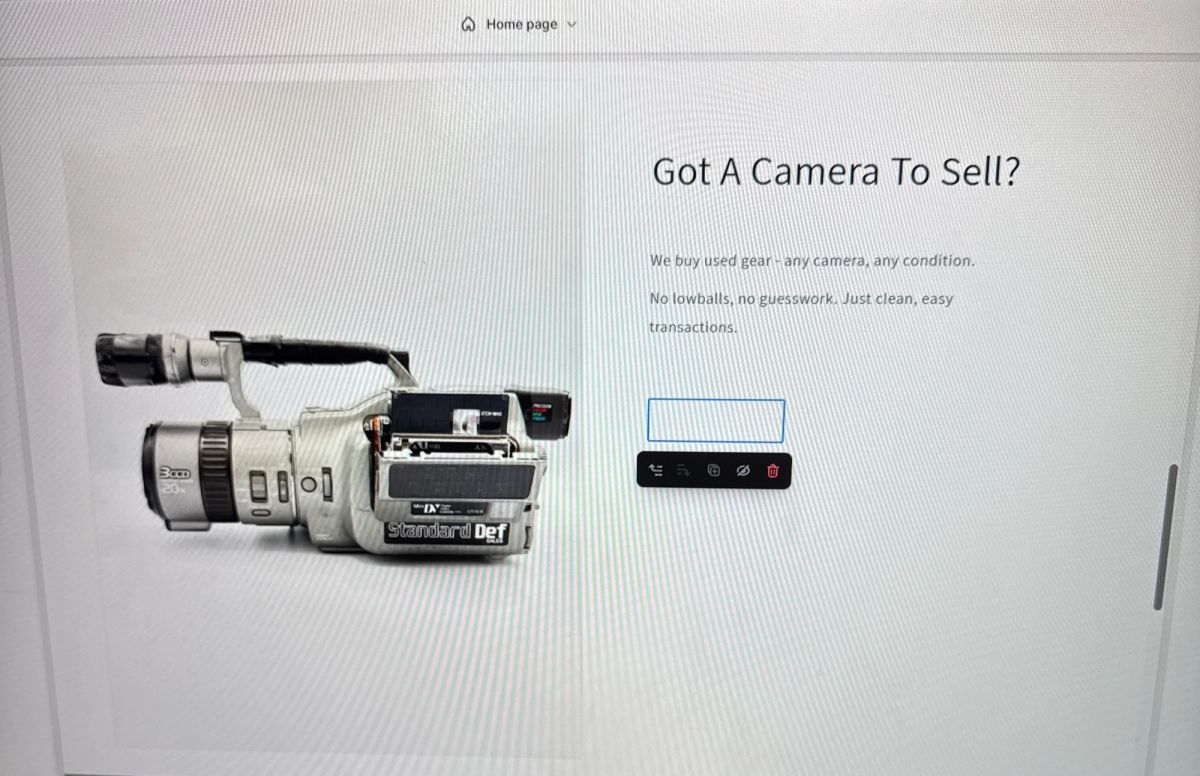
Of all the sourcing methods I've tried, customer trade-ins were eventually the most important to SDS.
Rather than constantly searching for stock myself, I wanted people to come directly to the business when they had cameras to sell.
How I built my first trade-in service
My first trade-in system was extremely basic.
Customers would email me with the camera they wanted to sell, and I'd reply using a copied template with a manually entered offer.
If they accepted, I'd arrange for them to send the equipment in and pay by bank transfer after receiving it.
As the business grew, I paid a developer approximately £3,000–£4,000 to build a dedicated trade-in form.
That was a significant investment for a relatively simple system, and further changes could become expensive.
Eventually, I started learning more about coding and building parts of the platform myself because there were so many features I wanted to add. For additional features I was quoted £15,000–£20,000 or more by several London developers, so it can quickly get costly.
Why trade-ins worked so well
Instead of relying entirely on finding bargains before everyone else, customers were actively coming to SDS looking to sell.
I also noticed that trade-ins often arrived with more accessories and were generally better cared for than some of the equipment I'd purchased through marketplaces.
There was something particularly satisfying about receiving cameras that had been sitting unused in someone's cupboard for years, getting them working again and finding them a new owner.
The real challenge is customer acquisition
For SDS, that meant investing in social media, search engine optimisation, advertising and building a reputation over several years.
At one stage, I was posting on social media almost every day, spending a significant amount of my time creating content.
We also experimented with Google and Meta advertising.
In some campaigns, basic quote enquiries could cost from around 50p to £3+ each.
If ten people request quotes and only one accepts, the cost of acquiring that completed trade-in can be much higher than the cost per lead suggests.
For higher-value equipment, acquiring a successful trade-in could sometimes cost considerably more.
You also continue paying for advertising even when customers reject your offers.
Don't forget the hidden costs
Other expenses can include:
- Website development and maintenance.
- Customer support and quote processing.
- Shipping labels and carrier charges.
- Payment administration.
- Testing, cleaning and inspection.
- Unsuccessful or revised trade-ins.
- Marketing and advertising.
- Returns and disputes.
I also learned to check shipping contracts carefully. At one point, I discovered that my DPD arrangement included ‘retainer’ charges of £48 per week when shipment volumes were low.
Would I recommend building your own trade-in platform?
If you're just starting out, a simple enquiry form on your website might be enough.
I'd avoid spending thousands on custom software before you've established that customers want to sell to you and that you can price those trade-ins profitably.
For businesses that want more sourcing opportunities without taking on all the software and marketing work, a trade-in network may be a more practical starting point.
9. How to Source Used Cameras Through Trade-In Networks
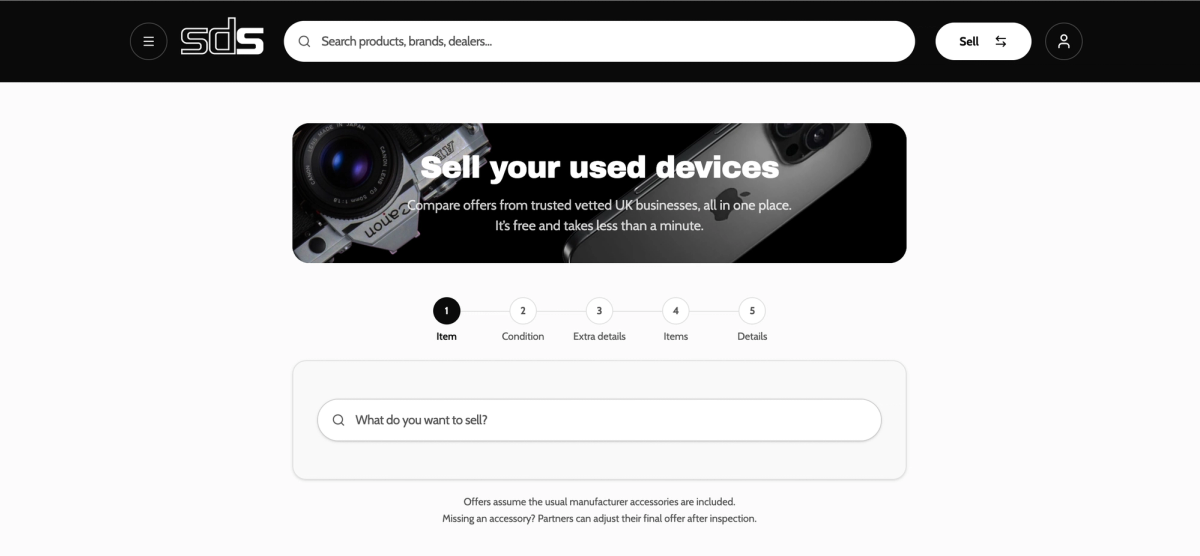
Best for: Businesses wanting customer trade-in opportunities without building their own acquisition system.
After years of running a camera resale business, I realised that the part of the business I enjoyed most was bringing in customers, finding equipment and building the systems behind the process.
I enjoyed marketing, software development and creating tools far more than managing an increasingly large physical inventory operation.
Instead of buying all the equipment ourselves, SDS Compare connects customers looking to sell their technology directly with participating businesses that want to buy it.
How SDS Compare works for camera dealers
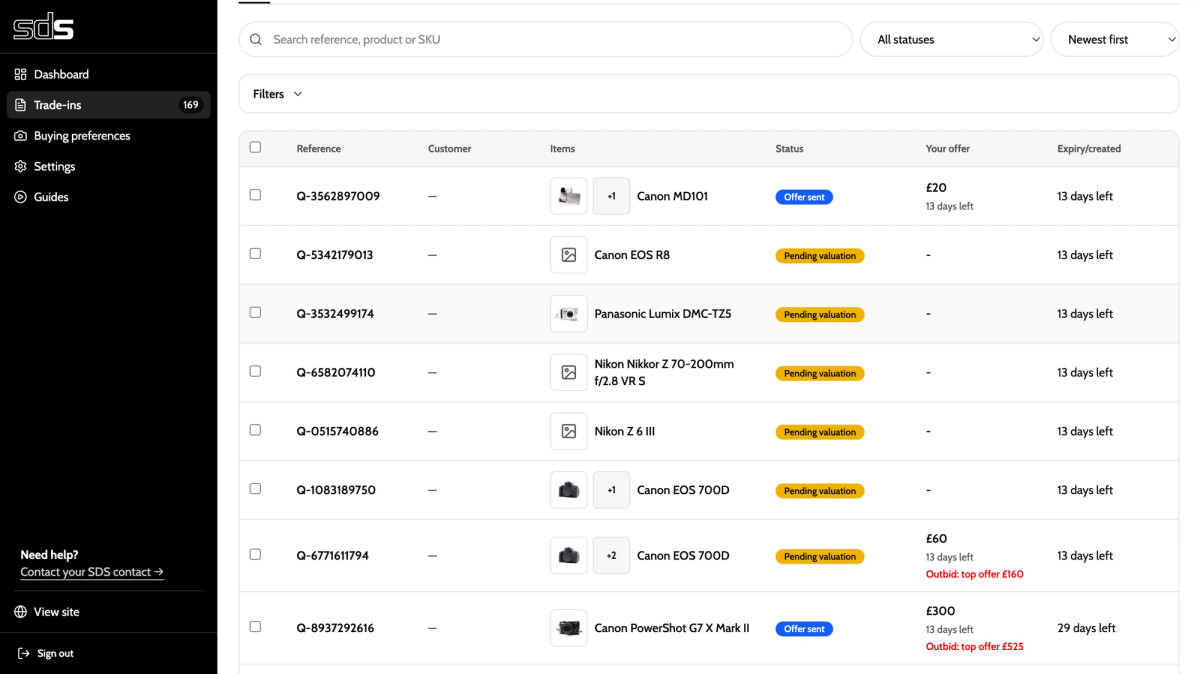
Approved partners can review relevant trade-in requests and make offers through their business dashboard.
You can:
- Choose the camera categories, brands and products you're interested in.
- Receive notifications about relevant trade-in requests.
- Submit manual offers.
- Set automatic buying prices for selected models.
- Manage accepted offers, inspections and customer payments.
- Build recognition for your own business through customer-facing profiles and reviews.
For example, if your business specialises in Canon prime lenses, you can set it so you just receive quotes for those products rather than reviewing every camera submitted to the platform.
Automatic offers can also help businesses respond to quotes for popular models which they often price similarly, without having to log in and manually send a quote every time.
What does SDS Compare cost?
At the time of writing, SDS is offering approved new partners no joining fee.
For each completed trade-in there is a 10% fee plus VAT, to cover our advertising, with the SDS fee capped at £50 plus VAT.
The fee becomes payable when a trade-in successfully proceeds through inspection and the customer is paid. If the transaction is rejected and does not complete, no fee is due.
Shipping, inspection and payment remain the responsibility of the purchasing dealer under the partner terms.
An example: Buying a Sony FX3 through SDS
Imagine your business purchases a Sony FX3 from a customer for £2,200 and subsequently sells it for £2,900.
The initial difference between those two prices is £700.
Under the current capped fee structure, SDS's fee would be £50 plus VAT.
That leaves a £650 price difference after the SDS fee but before any applicable resale VAT, shipping, testing, selling fees, warranty costs or other expenses. This is not net profit; VAT recovery depends on the dealer's circumstances.
Why I wish this existed when I was reselling cameras
I would have bought and sold far more stock, without having to spend time constantly creating adverts, chasing enquiries and maintaining my own trade-in software.
It also gives smaller camera businesses access to automated buying tools that can otherwise be expensive to develop themselves.
We want partners to build their own reputation, receive recognition for good service and develop their businesses alongside the platform.
Is SDS suitable for every business?
SDS is still growing: trade-in volume is currently limited, and partners aren't guaranteed requests or accepted offers.
Partners also need to provide competitive valuations, inspect equipment accurately and deliver a reliable service.
But if you're a camera retailer, electronics refurbisher or repair business looking for another way to source stock, it's worth exploring.
Apply to become an SDS Compare partner
Which Camera Sourcing Method Is Best?
The right choice depends on your experience, available capital, technical skills and how much stock you need.
| Method | Main advantage | Main drawback | Best suited to |
|---|---|---|---|
| Online marketplaces | Individual bargains | Customer trade-in requests | Beginners |
| Broken camera repairs | High potential returns | Technical skills required | Repairers |
| Job lots / wholesale | Bulk stock | Faulty equipment | Volume buyers |
| Auctions | Clearance opportunities | Fees and condition | Experienced dealers / Repairers |
| International sourcing | Rare equipment | Import costs | Niche specialists |
| Local clearances | Unique stock | Inconsistent supply | Local resellers |
| Other dealers | Convenient stock | Smaller margins | Established shops |
| Own trade-in service | Control over sourcing | High setup costs | Established businesses |
| Trade-in networks | Low risk, no commitment, consistent trade-in requests | Competition for offers | Dealers, refurbishers, and businesses of all sizes |
Personally, I would combine a few methods rather than rely entirely on one.
For a new reseller, marketplaces and repairable cameras can be useful places to start.
For an established business, I would place much more emphasis on repeatable sourcing channels such as customer trade-ins, dealer relationships and trade-in networks.
How Much Should You Pay for Used Camera Stock?
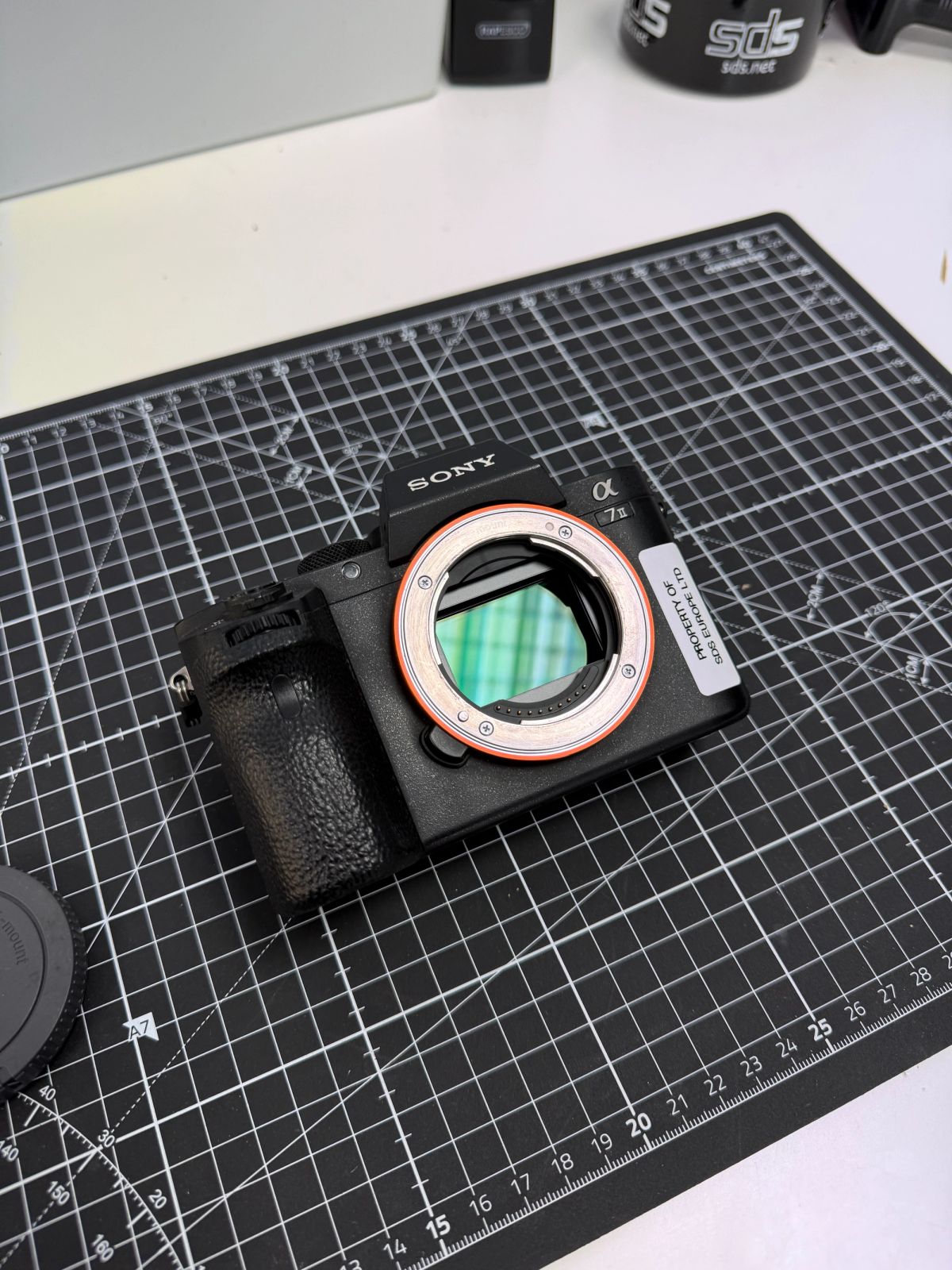
Before making an offer, you need to understand what the camera is realistically worth once it's ready to sell.
My historical buying approach
When running SDS, I generally worked backwards from the expected resale value.
For older or more failure-prone equipment, I would sometimes offer around 50–55% of the expected selling price.
For modern equipment, my historical buying price was often around 60–90% of expected resale value, depending on condition, demand and risk. These are my own past rules of thumb, not industry averages.
Buying a £2,000 lens for £1,600 leaves a £400 difference, but usually involves considerably more capital and potentially greater financial risk.
I also considered stock turnover: a lower-margin camera selling quickly could beat a higher-margin model sitting unsold for months.
Don't confuse the price difference with profit
You may need to deduct:
- VAT where applicable.
- Shipping and packaging.
- Marketplace or payment fees.
- Repairs and replacement accessories.
- Labour and testing.
- A realistic allowance for returns and faults.
- General business overheads.
For VAT-registered UK dealers, the VAT Margin Scheme may be relevant when purchasing eligible second-hand goods, particularly from private individuals.
Make sure you understand the requirements and use an accountant familiar with second-hand goods.
Five Lessons I'd Give Anyone Starting a Camera Resale Business
After several years running SDS, these are probably the most important lessons I'd pass on.
1. Start with a niche
You don't need to buy every camera.
I started with one model, the Sony VX1000, and built enough knowledge to understand its faults, accessories, demand and resale value.
That specialist knowledge gave me an advantage.
2. Keep your expenses low
It's easy to start spending more as revenue grows.
Bigger offices, additional staff, subscriptions, packaging and equipment can quickly eat into your margins.
I've made that mistake myself.
Keep your overheads manageable until you have consistent profits, not just increasing revenue.
3. Never assume untested means working
If you're buying untested camera stock, price it according to the possibility that a large proportion may be faulty.
A cheap job lot isn't a bargain if most of it can't be sold.
4. Understand VAT before you scale
One of the most important things I learned was how much VAT can change the economics of a used-equipment business.
Speak to an accountant early, understand your registration obligations and establish whether the VAT Margin Scheme is appropriate. You will want an accountant which specialises and understands used stock, I have heard good things about Ecommerce Accountants from other sellers.
Don't wait until you're already processing large volumes to discover that your pricing model doesn't work after tax.
5. Build reliable sourcing channels
Big one-off bargains are exciting, but they're difficult to build a sustainable business around.
In my experience, repeat customers, word of mouth and trade-ins generated more reliable stock over time.
I'd rather build a business with consistent purchasing opportunities than spend every day trying to beat other resellers to the latest eBay listing.
Final Thoughts: How Would I Source Camera Stock in 2027?
If I were starting a used-camera business again, I'd begin by specialising in a few categories I understood well.
I'd use marketplaces to find my first stock, learn which products were profitable and develop my testing and pricing processes.
If I had repair skills, I'd consider purchasing faulty equipment where the likely repair costs made sense.
But as soon as the business started growing, I'd look for ways to bring stock directly to me rather than spending hours looking for it.
I'd build relationships with customers and other dealers, establish a simple trade-in process and explore platforms such as SDS Compare to help generate additional buying opportunities.
The biggest lesson I've learned is that a successful camera resale business needs more than good deals. It needs a reliable and profitable way to keep stock coming in.
If you run a camera shop, repair business or electronics resale company, you can apply to join SDS Compare and start exploring trade-in opportunities from customers across the UK.
Our Photo and Video category is live now, with more categories such as Phones, Laptops, and more, rolling out in the near future.
More articles
See all articles
Selling Guides
Where to Sell Camera Gear in the UK: Trade-In, Marketplaces, or Direct?
Looking to sell camera gear in the UK? We compare marketplaces, camera dealers, and trade-in comparison services to help you find the best way to sell or trade in your used camera equipment in 2027.
SDS News
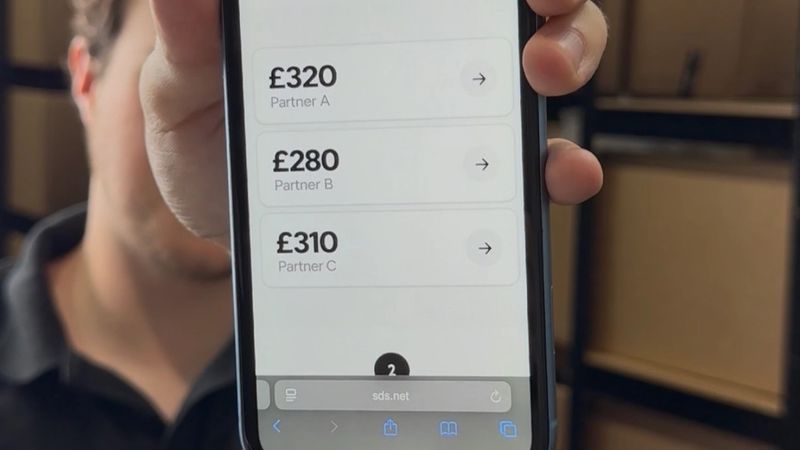
Introducing SDS Compare: Why We’re Changing How the UK Buys and Sells Used Tech
SDS started as a specialist used-camera business in 2021. Today, we're building something much bigger: a comparison platform designed to make buying and selling used technology easier for everyone.